
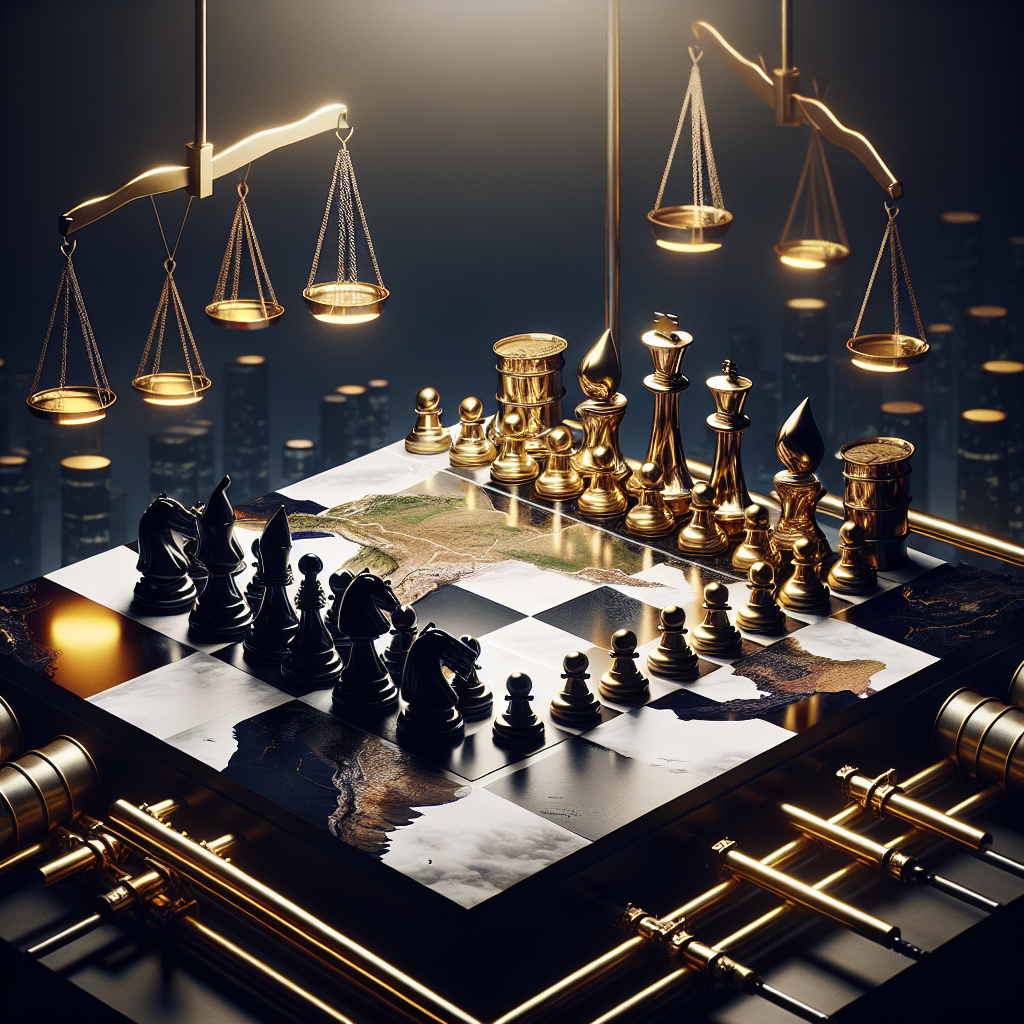
Executive Summary: Capital just woke up to the biggest forced repricing of Western Hemisphere political risk since 2003. Oil markets now trade not on barrels, but on legitimacy. Washington grabbed a head of state in a midnight raid and declared it will “run” a sovereign country and tap its reserves. Investors now face a world where the U.S. treats resource nationalism as a negotiable inconvenience and regime change as an energy policy tool. Expect crude volatility, EM contagion, and a global reminder that great powers still hunt in the open.
1. The Realist View: Power is the Only Currency
Strip out the moral theater. Look at the incentives. Washington just executed the geopolitical equivalent of a leveraged buyout: neutralize management, seize the asset, install interim control, monetize the cash flows. That’s how power blocs behave when they see a vacuum and a commodity they need.
The U.S. leadership didn’t hide its motive. Trump said it openly: run the country for a while, fix the oil infrastructure, sell the barrels. This isn’t subtle. This is the language of a state that stopped pretending it operates inside the old guardrails. Markets shouldn’t react with shock. States always behave like mafia families when energy security starts to wobble. A capo protects the pipeline, whatever it takes.
Why strike now? Three reasons: the global crude supply map tightened after two years of Mideast skirmishes; China accumulated long-term Venezuelan offtake agreements that locked Washington out; and the administration needed a foreign-policy win heading into an election environment soaked in nationalism. When empires sense encirclement, they move fast. Hesitation costs more than outrage.
This operation also sends a message to every petro-state on the fence: your sovereignty depends on your alignment. If you deliver barrels to the wrong buyer, or you flirt with adversaries, Washington may treat you like a non-compliant franchise. That’s the brutal logic of Realpolitik. Investors usually forget this until a night like this one.
2. The Liberal View: The Friction of Hypocrisy
Official narratives claim the strike targeted narco-terrorism and protected U.S. lives. Every legal expert on cable news already tore that framing to shreds. It won’t matter. Institutions can’t enforce norms they abandoned years ago.
The UN will hold its emergency meeting. There will be speeches about sovereignty and international law. Then everyone will shrug because none of the major powers want to set a precedent they themselves refuse to follow. Europe will issue strongly worded concerns while simultaneously buying U.S.-brokered Venezuelan barrels at a discount. The OAS will fracture along predictable lines. Latin American allies will condemn the action yet quietly negotiate for security guarantees or LNG pre-purchase deals.
This is the hypocrisy premium. Leaders talk about rules, but they act based on leverage. ESG funds will perform ritual outrage, but their traders will still rotate into U.S. energy suppliers and defense contractors because their mandates don’t allow them to ignore alpha. That gap between words and behavior defines the entire liberal order right now. It creaks under its contradictions, yet still functions because no one offers a better alternative.
3. The Biblical Lens: Human Nature & Power
History doesn’t repeat; human nature does. Regimes fall not because fate turns against them, but because their hubris blinds them to the shift in the balance of power.
- The Trap of Hubris: Maduro assumed he could play the strongman indefinitely, even after hollowing out his institutions and alienating regional players who once tolerated him. That’s the ancient pattern: leaders overestimate their invulnerability right before the floor drops out. “Pride goes before destruction” isn’t poetry. It’s an observable phenomenon across every empire chart from Rome to Baghdad.
- Structural Flaw: The Venezuelan state resembled a modern Tower of Babel—over-centralized, brittle, propped up by coercion and oil rents. The moment shock hit the system, the structure cracked. A tower built on patronage can’t withstand a well-calibrated external strike, and everyone knew it except the people inside the tower.
- Moral Hazard: Washington now faces its own version of the same curse. Once a state discovers it can remove inconvenient leaders and extract resources directly, it feels tempted to repeat the trick. Human nature doesn’t change. Power invites escalation. The more you succeed, the more you gamble. Eventually the bill comes due, and usually at the exact moment the power thinks it stands strongest.
That lens doesn’t moralize the event. It explains the pattern: corruption breeds fragility, fragility invites predation, predation breeds overconfidence, and overconfidence plants the seeds of future collapse. Investors should study those cycles, not the headlines.
4. The Market Pragmatist View: Alpha Generation
This is where we stop philosophizing and start calculating.
The moment Washington said it intends to “run the country” and “tap the reserves,” every energy desk on Earth realized the next six months won’t follow any traditional supply-demand model. Venezuela holds the largest proven reserves on the planet, but most of it sits locked behind decayed infrastructure, sanctions, political chaos, and absent capital. If the U.S. stabilizes the production environment even modestly, the oil market faces a new supply shock.
But stabilization isn’t a given. A power vacuum can create sabotage, insurgency, or internal military fractures. That means volatility. And volatility is where alpha lives.
- Winners:
- U.S. defense contractors. Nothing drives order books like live operations and rapid deployments in the Western Hemisphere. The market already priced in Mideast conflict, but no one priced a Caribbean shock.
- Supermajors with downstream flexibility. Companies that can process heavy sour crude—think the refiners with Gulf Coast footprints—gain a competitive edge because Venezuelan grades align with their systems.
- The U.S. dollar. Anytime Washington flexes military and resource power simultaneously, capital flows home. Investors seek the umbrella even when they hate the weather.
- Losers:
- Emerging market sovereign debt tied to LatAm. Risk premia spike when the region watches a neighbor’s leadership get extracted in the night. Countries with fragile leadership start trading like potential targets, whether or not they deserve it.
- Chinese oil-backed loans to Venezuela. Beijing structured those deals assuming the Chavista regime would outlast Western patience. Those barrels may now reroute. That’s a write-down masquerading as diplomacy.
- Crypto markets in the region. Venezuelans used crypto to circumvent the state. Any U.S.-backed interim authority could clamp down in the name of “stability,” bottlenecking flows.
- The Hedge: If I ran a multi-asset book today, I would quietly accumulate exposure to shipping—specifically tankers capable of rerouting Caribbean crude flows. Supply chains don’t pivot cleanly after regime change. The world will scramble for carriers that can handle uncertain insurance conditions and rapid origin shifts. That asymmetry offers a cleaner, less politically exposed trade than direct bets on crude.
Strategic Outlook (6-12 Months)
The next year won’t resemble Iraq 2.0 or Panama 2.0. This plays more like a corporate restructuring masquerading as liberation. Washington wants barrels, not nation-building. If U.S. forces secure the oil corridor and delegate civilian governance to a coalition of friendlies, production rises by late Q3. Brent trades in a wide band—$79 to $102—as markets toggle between optimism and sabotage risk.
LatAm currencies weaken across the board. The Mexican peso wobbles as speculators test its resilience. Chinese equities with exposure to foreign commodity financing take a hit. U.S. energy equities outperform the S&P by at least 8% over the next two quarters.
The wild card: an insurgency inside Venezuela’s interior that targets pipelines. If that erupts, the entire operation flips from supply boost to supply drag, and crude spikes above $110. Market participants should price that tail event with more seriousness than Washington currently projects. Every power vacuum attracts actors who prefer chaos to foreign management. Investors who lived through Libya know the script.